Human creativity
is infrastructure
Most organisations treat creativity as a talent some people have. This keynote argues it is a condition leaders build — designable, measurable and improvable, like any other system the business runs on.
Creativity sounds fluffy
Say it in a boardroom and watch the eyes glaze. Creativity sounds like beanbags and brainstorms — the soft stuff, scheduled for the afternoon of the offsite, budgeted like a perk and cut like one. The "hard" agenda — systems, capital, headcount — gets the morning and the money.
But the fluff was never the creativity. It was the theatre built around it. Treated seriously, creativity is the hardest-edged item on the agenda: a set of conditions that can be observed, measured and rebuilt — and that decide whether the strategy gets any ideas worth executing. This keynote makes that case in the language the morning session respects.
Technology can accelerate work.
Only people can imagine what comes next.
As AI compresses the value of routine work, the work that remains is the work only people can do. Which makes the conditions for that work a board-level concern — not a poster in the kitchen.
Creativity is a condition you build
Permission
The safety to contribute before the idea is safe. Built through leadership behaviours and decision rules, not posters about psychological safety.
Provocation
Better questions, unfamiliar perspectives and productive tension — the deliberate disruption of default thinking, on a schedule.
Pathway
The route from idea to evidence: experiments with owners, budgets and deadlines, so good thinking stops dying in slide decks.
CREATIVE
CULTURE
CODE
The front door to the body of work. One argument — creativity is infrastructure — three conditions, and the specific mechanisms leaders use to build each one. Designed for conferences, leadership summits and executive offsites; calibrated to the room, not recycled.
The room leaves with a shared language, a way to locate their blocker, and moves they can run on Monday morning.
About the keynoteCreativity isn't a talent you hire.
It's a condition you build.
Put the argument in front of your leaders. Tell us the date, the city, the audience and the moment your organisation is in — we'll take it from there.
Book the keynoteCreativity isn't a talent you hire.
It's a condition you build
One argument, three conditions, and the mechanisms to build them. Made for the leaders in the room — the people who own the budgets, the meetings and the decision rules where creativity actually lives or dies.
The shape of the talk
01 · The squeeze
AI is compressing the value of routine work. What remains is the work only people can do — and most organisations are configured to suppress exactly that work.
02 · The reframe
Creativity is not a trait some people possess. It is infrastructure: a set of conditions leaders design, measure and maintain. The question changes from "how do we hire creative people?" to "how do we make creativity inevitable?"
03 · The three conditions
Permission, Provocation, Pathway — each brought to life with field stories and evidence, each anchored to the question a leader can carry out of the room: Can I? Why not? How do we make it happen?
04 · The build
The close is a working session in miniature: each leader locates their weakest condition and leaves with the first mechanism to build — dated, owned, and small enough to survive contact with the calendar.
A reframe that sticks
Creativity stops being a personality trait and becomes infrastructure — something the organisation can inspect, fund and fix.
A shared language
Three conditions and three questions any team can use to locate its blocker — in the room, that day, without a consultant.
Mechanisms, not motivation
Specific moves — meeting designs, decision rules, experiment quotas — matched to each condition and ready to run on Monday morning.
Proof, not assertion
The conditions are observable and measurable — the room sees how, which is where the conversation with your executive team continues after the event.
Where it works
Conference keynote
45–60 minutes, main stage. Calibrated to the industry and the moment — never the same deck twice.
In-house keynote
The same argument inside your walls — leadership summits, executive offsites, all-hands — built around the questions your leadership team is actually sitting on.
Extended session
A half-day working format: the argument in the morning, then leaders diagnose their own three conditions and design the first mechanisms in the afternoon.
Mid-transformation? Mid-AI-rollout?
That is the room this talk was built for — the leaders who own the narrative and the budget. Send the date, the city, the audience and the format you have in mind; you'll get a straight answer on fit, availability and fee.
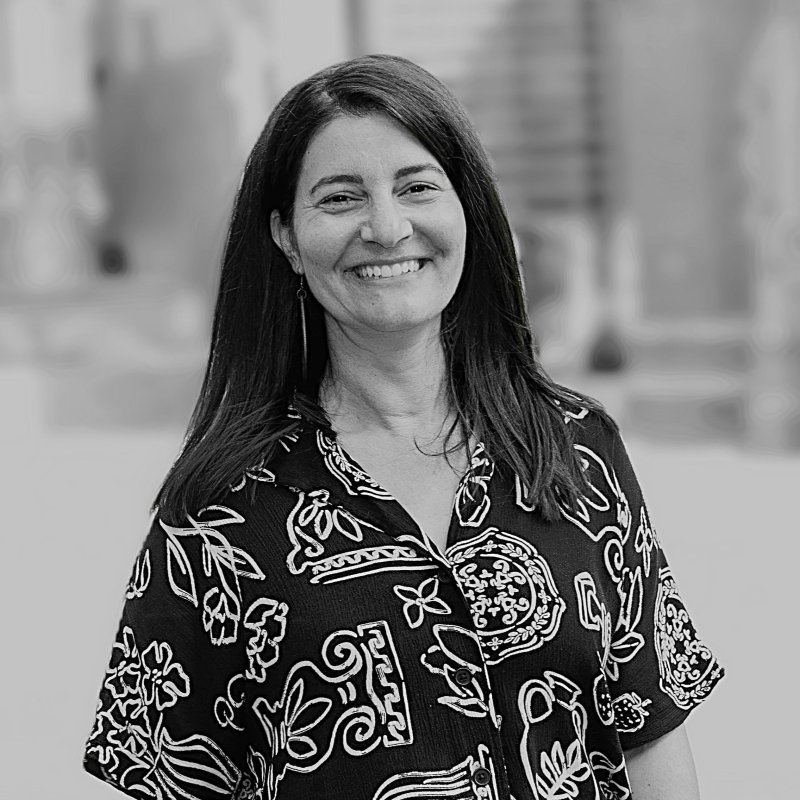
Book the keynoteCettina Raccuia
Cettina Raccuia is a design-led innovation leader who has spent a career inside the rooms where good ideas quietly stall — health, education, community services and financial services, across public, private and not-for-profit — working out why the organisations that ask for innovation so often get in its way.
Eight years at RAC WA built the proof: leading experience and design teams, digital transformation and member-centred change, building innovation capability across the business, and running RAC CoLAB — a design-led lab creating services and experiences with customers and communities — ultimately as General Manager and executive leader. Now, as director of Alternative by Design, she works with executive teams putting the three conditions into practice.
The Creative Culture Code is the result: a body of work that treats creativity as a condition leaders design rather than a talent they hire. She mentors across the innovation ecosystem — Curtin Ignition, Social Impact Startup Weekend, ADPList — and is a WiTWA role model.
Based in Perth, Western Australia. Speaks anywhere.
Human creativity is infrastructure
Most organisations treat creativity as a trait: they hire for it, concentrate it in a department called Innovation, and are then surprised when nothing changes. This work reframes it as a system — three conditions that determine whether ideas surface, sharpen and ship, in any team, in any industry.
The claim is testable. Conditions can be observed, measured and rebuilt. That is what separates this from motivation: motivation wears off on the drive back from the offsite; infrastructure is still there on Monday morning.
Start with the keynote
One hour, one argument, and a room full of leaders with somewhere to start.
Book the keynoteBook the keynote
One email is enough. Tell us about the room and the moment, and you'll get a straight answer on fit, availability and fee — no discovery-call gauntlet.
What helps us answer fast
The date and place
When and where — city and venue if you have them, a window if you don't.
The room
Who is in it and how many — executives, conference delegates, a leadership cohort — and whether it's in person, virtual or both.
The moment
Why now. A transformation programme, a restructure, an AI rollout, an innovation agenda that has stalled — the talk is calibrated to the moment, so name it.
The format
Conference keynote, in-house keynote, or the extended half-day working format. Unsure is a fine answer — we'll recommend one.
Reach us
hello@creativeculturecode.com — the fastest route for bookings and media.
linkedin.com/in/cettinaraccuia for speaking clips and the working notes behind the body of work.
Base
Perth, Western Australia — speaks anywhere; virtual formats run in any timezone.
Technology can accelerate work. Only people can imagine what comes next.
If that sentence describes the conversation your leadership team needs to have, the keynote is where it starts.
Email the enquiry